







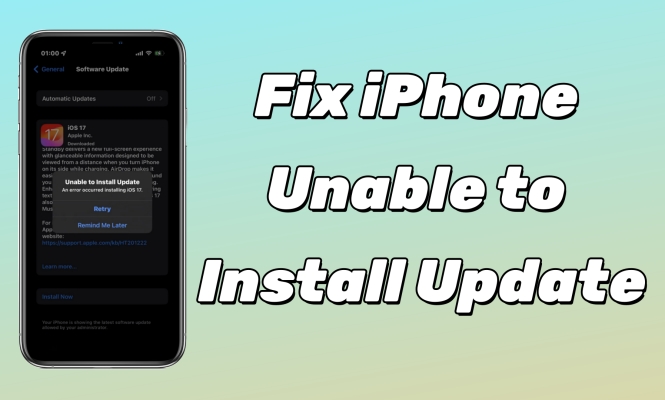
You see the red notification badge that a new version of iOS is available, you tap "Install Now," and then nothing. Or worse, a pop-up message saying Unable to Install Update that tells you exactly what went wrong but not how to fix it. When your iPhone is unable to install an update, the solution usually depends on the specific text displayed on your screen. Search engines and support forums are filled with generic advice, but this guide breaks down the root causes of update failures and provides useful solutions to get your device updated immediately.
- Part 1. Why Does My iPhone Say Unable to Install Update?
- Part 2. How to Update When An Error Occurred Installing iOS 18/26
- Part 3. How to Fix Unable to Install Software Update on iPhone
- Part 4. FAQs about iPhone Unable to Install Update
- Part 5. Conclusion
Part 1. Why Does My iPhone Say Unable to Install Update?
When you see the "Unable to Install Update" message, it means your iPhone has successfully downloaded the file but has failed the final "handshake" required to begin the installation. With the massive file sizes of iOS 18 and beyond, this is most often a conflict between your available storage and the system's need to "unpack" the new software. Let's know more details about an error message while updating an iPhone before jumping into fixes.
What An Error Occurred Installing iOS?
When your iPhone update fails, the error message you receive is a diagnostic clue. With iOS 18 and beyond, these errors are more specific about where in the "pipeline" the failure occurred. Here is a comparison of the most common iPhone update error message.
| Error Message | Where the Process Failed | Primary Cause | Best Fix |
|---|---|---|---|
| Unable to Check for Update | Pre-Download: The phone can't see the Apple servers. | No internet or Apple server outage. | Check Wi-Fi or Apple System Status. |
| Unable to Verify Update | Security Check: The phone can't confirm the file is authentic. | Unstable Wi-Fi or VPN interference. | Disable VPN and reset Network Settings. |
| Stuck on Preparing Update | Decompressing: The file is being "unpacked" on the phone. | Low storage or corrupted download file. | Delete update file from iPhone Storage and re-download. |
| Stuck on Update Requested | Initial Handshake: You are "in line" on Apple's server. | Server congestion. | Wait 1–2 hours or use a computer to update. |
| Unable to Install Update | Final Execution: The phone tried to install but crashed. | Critical storage shortage or low battery. | Free up 10GB+ space and plug into a wall outlet. |
Fix various update errors like Unable to Install Update and support installing the update with ease.
Why Is iPhone Unable to Install Update?
Whether you are stuck on a "Verification Failed" loop or the installation simply won't trigger, understanding the reasons of being unable to install update on iPhone is the first step toward a solution. Here are top reasons for the "Unable to Install Update" error.

Reason 1. Battery Safety Lock:
Apple will block the installation if your battery is below 50%, even if it is currently plugged into a charger.
Reason 2. Storage Space Limitation:
Even if the update is only 5GB, the iPhone often requires at least 10GB of free space to perform the installation.
Reason 3. MDM Profile Conflicts:
If you previously had a mobile device management software installed, the update might be blocked by the existing configuration profile.
Reason 4. Server Connection Failure:
Before installing, the iPhone must "verify" the update with Apple's servers. if your Wi-Fi is unstable, this verification fails.
Part 2. How to Update When An Error Occurred Installing iOS 18/26
It is incredibly frustrating that you have waited for the latest features, the download finally finishes, and then "Unable to Install Update. An error occurred installing iOS." No need to worry, there are other ways to update an iPhone, instead of installing the update over-the-air. Using a Mac or PC to update the iPhone can bypass the device's internal limitations. Let's see more.
2.1 Meet "Double Space" Requirement
One of the most common reasons an iPhone is unable to install an update is insufficient local storage. While an iOS update file might be listed as 5GB or 6GB, the installation process requires significantly more space. It is recommended to have at least 15GB to 18GB of free space for a major iOS release. Before diving into the update, check your iPhone storage first.
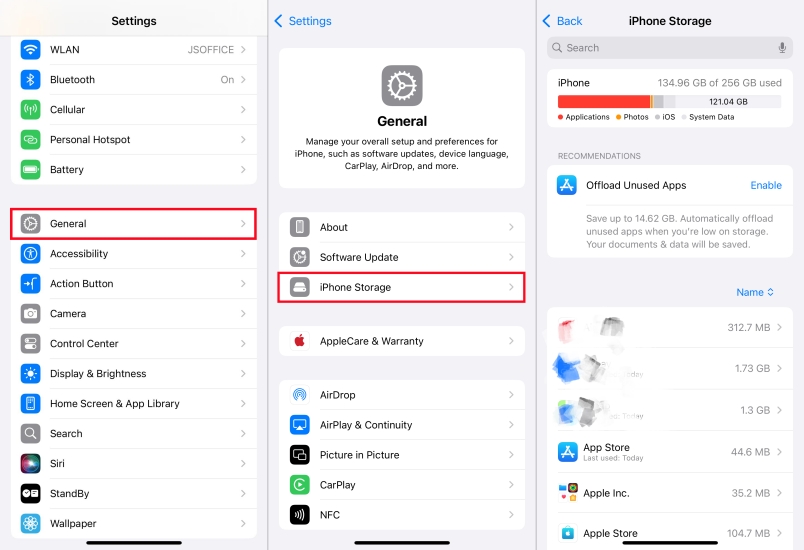
Step 1. Open the Settings app on your iPhone, then tap General.
Step 2. Under General, tap iPhone Storage to check free up the storage space.
Expert Tip:
If you're low on space, use the "Offload Unused Apps" feature to offload a few large games or temporarily delete long 4k videos. You can restore them once the update is finished.
2.2 Alternative Options to Update iPhone
If your iPhone keeps failing to update wirelessly, using a computer is the most authoritative workaround. This method is often more successful because the computer handles the heavy lifting of downloading and unpacking the file. There are two options to install the update on a computer, that is, to use iTunes or a professional iOS upgrade tool.
Update the iOS Version in iTunes or the Finder
Apple provides free tools like iTunes on a Windows PC and Finder on a Mac to manage updates from your desktop. Using iTunes or Finder depends on your operating system.
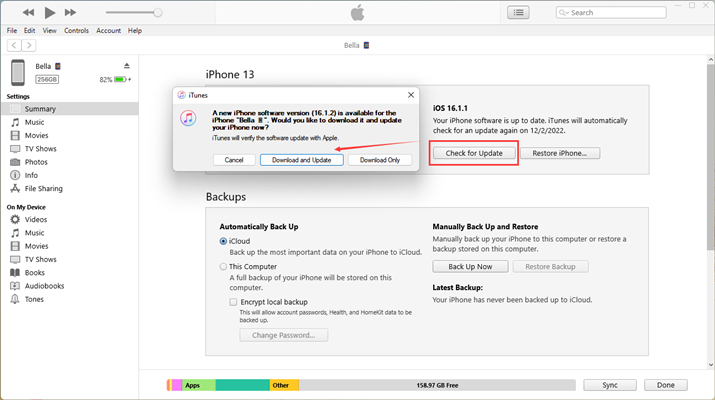
Step 1. Plug your iPhone into your computer using a USB cable.
Step 2. Tap Trust on your iPhone screen when prompted.
Step 3. Locate your device in iTunes or Finder by clicking the iPhone icon or name.
Step 4. Under the General or Summary tab, click Check for Update.
Step 5. Click Update and follow the prompts. Then wait to install the update.
Install the Update via a Professional Upgrade Tool
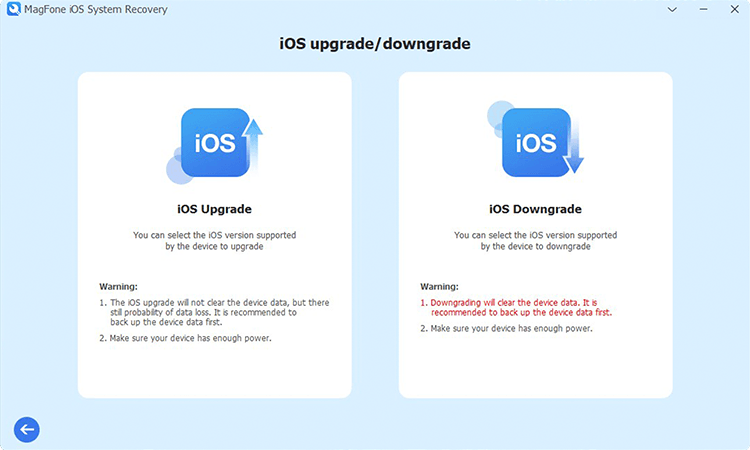
Standard Apple tools can sometimes fail if your iPhone is in a "glitched" state like a boot loop or stuck on the Apple logo. This is where professional tools like MagFone iOS System Recovery provide a distinct advantage. Not only functions as an iOS repairing tool, it also offers an update service to help users install any iOS version easily and safely.
Step 1. Launch MagFone software on your computer and connect your iPhone.
Step 2. Choose iOS Upgrade/Downgrade from the main interface.
Step 3. Click iOS Upgrade and check the device information shown on the screen.
Step 4. Click Download to download the latest compatible iOS version.
Step 5. Click Update to start installing the latest iOS version for the device.
Part 3. How to Fix Unable to Install Software Update on iPhone
When the error of iPhone Unable to Install Update happens, you won't be able to update your device directly anymore. In this case, you can choose to use a computer to update your iPhone if you have one. Thankfully, a few easy ways are available for fixing this issue if you don't have a computer to install the update. First, watch a video; then follow the ways step-by-step.
Solution 1. Charge the iPhone
The time an update takes depends on the size of the update and the number of files on your iPhone. Your iPhone will not install an update if it is below 50% battery unless it is plugged into a charger. So when you're updating your iPhone over-the-air, you're better keep your iPhone connected to a power source throughout the process.
Solution 2. Re-download the Update
If your download was interrupted by a loss of power or WiFi, the resulting file may be "corrupted," leading to an "Unable to Install Update" error. Fixing a corrupted update is to remove and download the update file. This is the most effective fix for 90% of users.
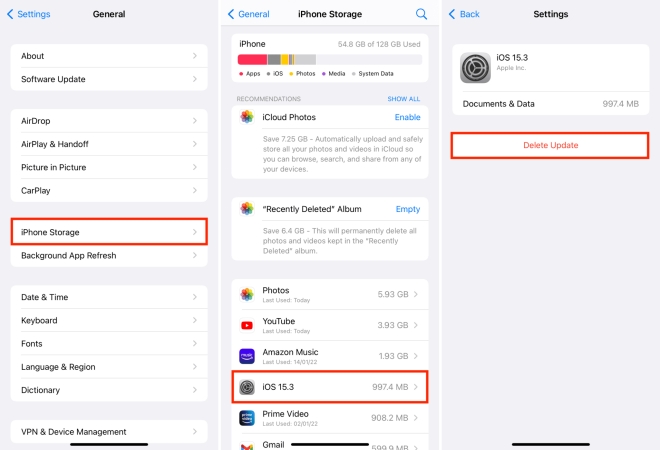
Step 1. Head to Settings > General > iPhone Storage.
Step 2. In the list of apps, find the downloaded update.
Step 3. Tap iOS Update, then select Delete Update.
Step 4. Return to the Software Update menu and trigger a fresh download.
Solution 3. Check the Network
Another common fix is to check the internet connection on your iPhone because the update cannot be done without a network. To avoid this possibility, check if your iPhone has connected to WiFi or enabled Cellular Data in the Control Center or Settings.
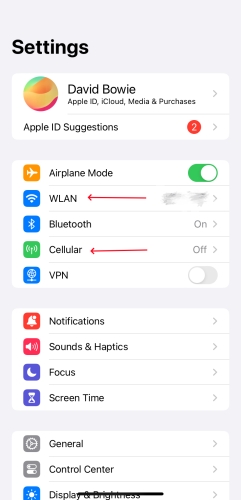
Step 1. Run Settings, then tap WLAN or Cellular.
Step 2. Check whether your iPhone is connected to a stable network.
Solution 4. Toggle Airplane Mode
Sometimes the "Verification" fails because of a momentary handshake issue with Apple's servers. In this case, refreshing the network on the iPhone is a feasible method to fix the handshake issue. To refresh the network, only need to toggle on and off Airplane Mode.
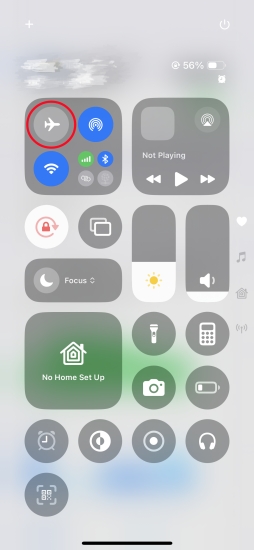
Step 1. Swipe down from the top-right corner of your screen.
Step 2. Tap the Airplane icon to turn on Airplane Mode on for 10 seconds.
Step 3. Tap the icon again to toggle off Airplane Mode.
Solution 5. Reset Network Settings
The update may timeout if your WiFi is sluggish. You can reset your network logic by toggling Airplane Mode. But if toggling Airplane Mode doesn't work, you can go to try resetting network settings on your iPhone. This only removes the saved WiFi password.
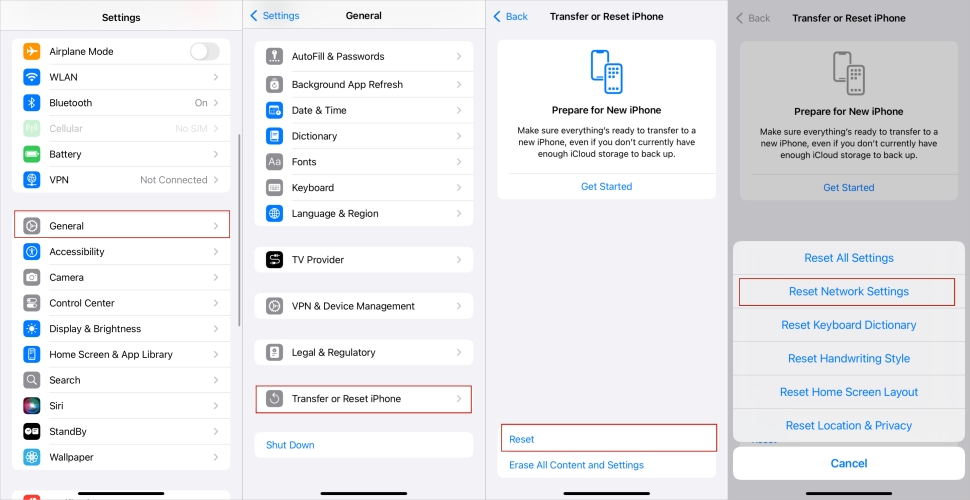
Step 1. Go to Settings > General > Transfer or Reset iPhone.
Step 2. Tap Reset and select Reset Network Settings.
Step 3. Enter the screen passcode and tap Reset again.
Solution 6. Force Restart the iPhone
Sometimes, some users may ignore the simplest method, that is, to force restart. A simple force restart can resolve most temporary or minor glitches on the iPhone. If your iPhone says Unable to Install Update, then perform a force restart on your device.
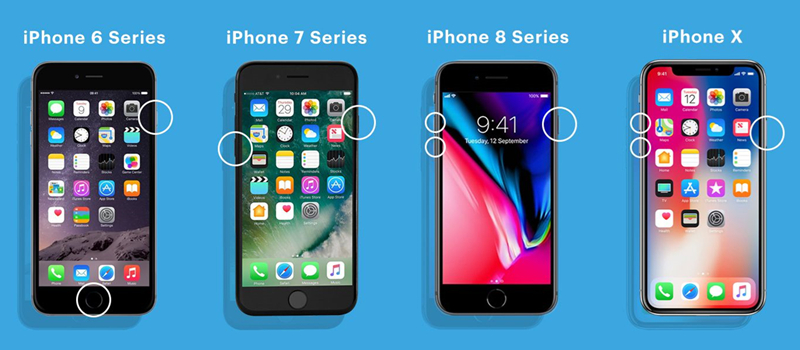
For iPhone 8 and Later:
Step 1. Press and quickly release the volume up button.
Step 2. Press and quickly release the volume down button.
Step 3. Press and hold the side button.
Step 4. When the Apple logo appears, release the side button.
For iPhone 7:
Step 1. Press and hold both the volume down button and the Sleep/Wake button at the same time.
Step 2. When the Apple logo appears, release both buttons.
For iPhone 6 and Earlier:
Step 1. Press and hold both the Sleep/Wake button and the Home button at the same time.
Step 2. When the Apple logo appears, release both buttons.
What we've mentioned above are tips you can do on your iPhone only. And for the next two solutions, you have to stand by a computer to finish. If your computer hasn't installed iTunes yet, you can switch to the second solution.
Solution 7. Remove MDM Restrictions
A configuration profile might be blocking the update on a work-issued or school-provided iPhone. Organizations often use MDM to enforce specific software versions, sometimes preventing you from updating manually. Just remove MDM restrictions to get your iPhone up to date.
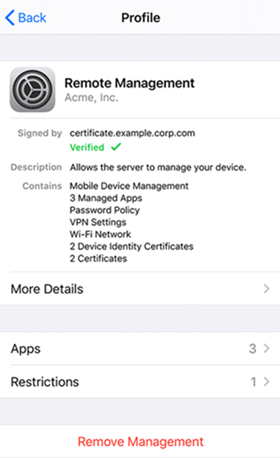
Step 1. Go to Settings > General > VPN & Device Management.
Step 2. Tap Management Profile, then select Remove Management.
Step 3. Enter the MDM removal password to remove the profile.
Expert Tip:
If you purchased a second-hand iPhone that is still locked to a previous owner's MDM, you may need specialized MDM removal tools like MagFone iPhone Unlocker. These tools can often bypass MDM restrictions without a password.
Solution 8. Use an iOS Repairing Tool
When standard troubleshooting like clearing storage or resetting network settings fails, your iPhone may be suffering from a deeper system glitch. Specialized tools like MagFone iOS System Recovery have become popular "last-mile" solutions to fix an iPhone unable to install update without the complexity of manual iTunes restores.
MagFone iOS System Recovery works by essentially "refreshing" your iOS firmware. It downloads a clean version of the operating system from Apple's servers and re-installs it over your current one, clearing out the bugs that cause updates to stall. It's easy to resolve iPhone Unable to Update via MagFone iOS System Recovery.

MagFone iOS System Recovery
Fix various iOS and iPadOS system issues, such as black screen, boot loop, frozen screen, or stuck on Apple logo, without data loss.
Step 1 Connect iPhone to Computer
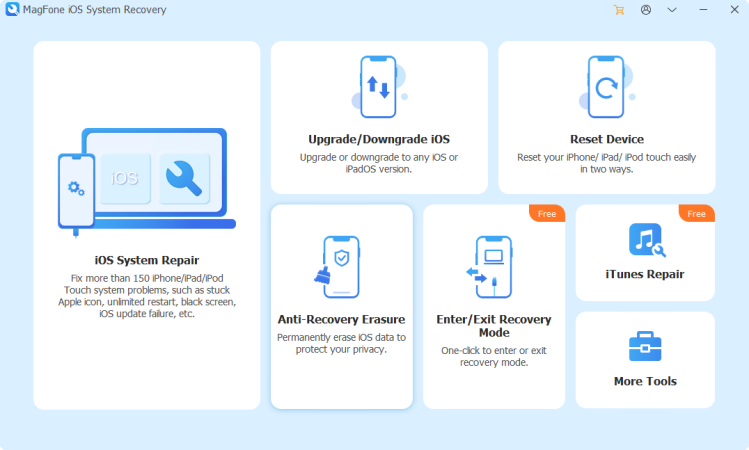
With the help of a USB cable, connect your iPhone to a computer. Then launch MagFone iOS System Recovery on the computer and click the iOS System Repair button on the main interface of the software.
Step 2 Go to Select Standard Repair
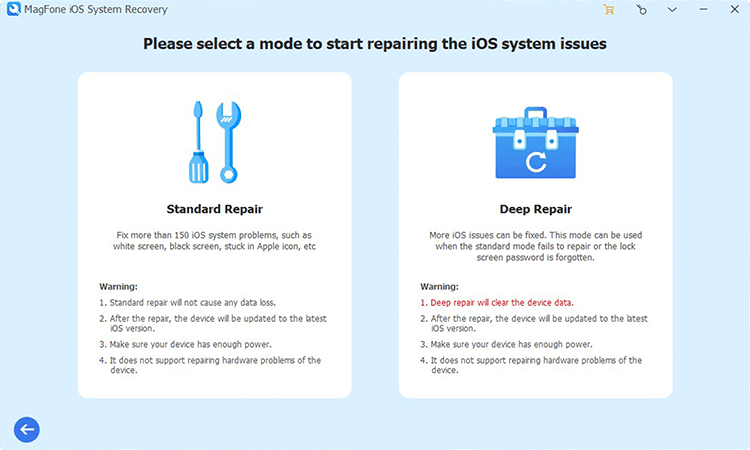
In the next window, there are two options for you to choose. Simply choose Standard Repair and click the Next button. After that, select your device model and put your device into DFU mode by following the onscreen instructions.
Step 3 Download the Firmware Package
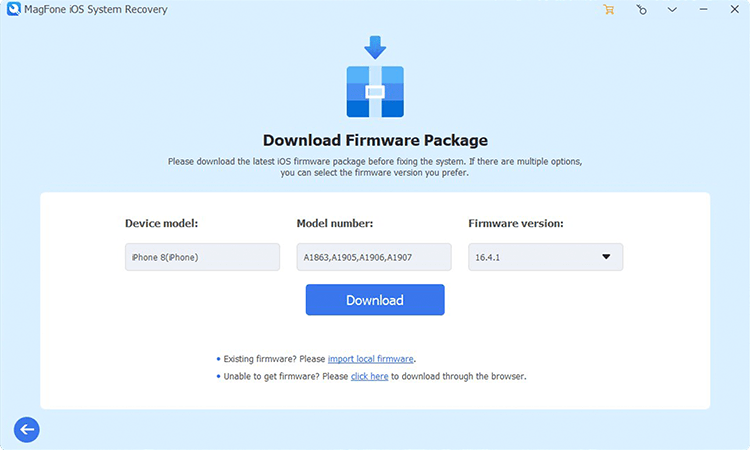
Now you have to check whether the device information is correct or not. You can manually correct the wrong information. Then you can click the Download button to start downloading and verifying the firmware package.
Step 4Fix iPhone Unable to Update
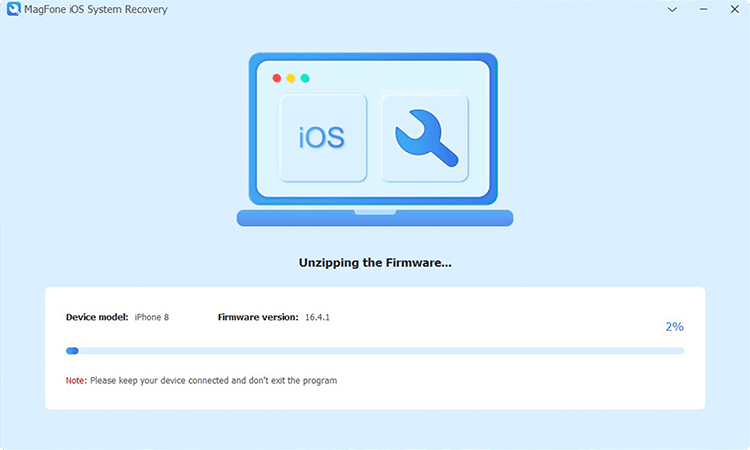
After successfully verifying the firmware package, simply click the Repair button and the software will start fixing the issue on your iPhone. You need to keep your device connected to the computer until the process finishes.
Part 4. FAQs about iPhone Unable to Install Update
How long does it take to update the iPhone?
In general, a standard iPhone update typically takes about 20~ 60 minutes to complete from start to finish. If everything goes perfectly, you can be back up and running in under half an hour. However, the time can vary based on your network speed and your specific device.
How to stop the update on an iPhone?
If your iPhone is currently downloading or "preparing" an update, you can still cancel it. To stop an update in progress, you need to disconnect your iPhone from the internet first. Then go to Settings > General > iPhone Storage, tap iOS Update in the list of apps, and select Delete Update to remove the partially downloaded update file.
How to turn off automatic updates on iPhone?
Usually, the iPhone will update automatically if you enable Automatic Updates in the Settings. But it may bother you when you're receiving an important call, and the iPhone suddenly updates. Here is a way to block the update automatically happening on the iPhone.
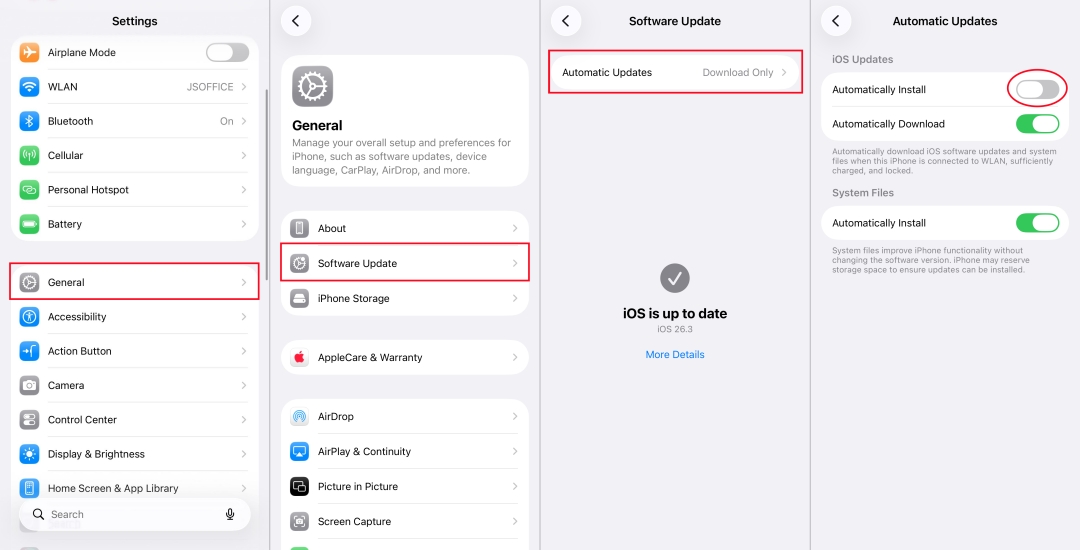
Step 1. Get into Settings > General > Software Update.
Step 2. Tap Automatic Updates, then switch Automatically Install off.
Part 5. Conclusion
Encountering the error of Unable to Install Update, you can follow the solution in this guide to fix the issue. If none of these common steps work, you may consider MagFone iOS System Recovery that can fix the update issue without any hassle. Also, when you cannot install the update over-the-air, you can use iTunes or MagFone iOS System Recovery to get a quick update.

Teresa Miller
Editor in chief




