









Have you ever discovered a hidden treasure during a hike and wondered how it got there? Geocaching turns ordinary outdoor adventures into exciting treasure hunts using GPS coordinates and hidden containers called Geocaches. While finding caches is fun, creating one can be even more rewarding. If you're wondering what is a Geocache and how to hide a Geocache on the app, this guide will walk you through every step and provide useful tips for creating a memorable cache experience.
- Part 1. Things to Know About Geocaching
- Part 2. How to Hide a Geocache Step by Step
- Part 3. How to Create Clever Geocache Hides
- Part 4. Conclusion
Part 1. Things to Know About Geocaching
Geocaching is an outdoor treasure-hunting activity that uses GPS technology to help participants locate hidden containers, known as "Geocaches" or simply "caches." The game was launched in 2000 shortly after the U.S. government made GPS technology available for public use. Since then, Geocaching has grown into a worldwide hobby, attracting millions of players from more than 190 countries.
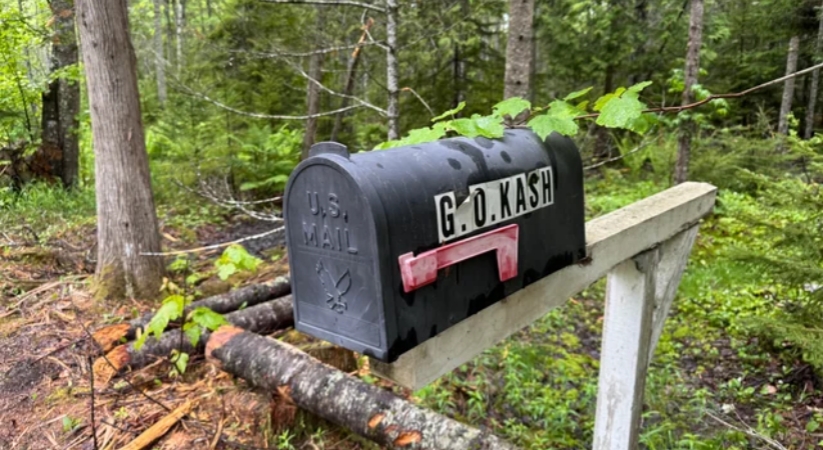
However, Geocaching is more than just a simple game of finding hidden objects. It follows a set of guidelines and rules designed to ensure fairness, safety, and environmental responsibility. Before starting your Geocaching adventure, you should first become familiar with the basic rules and etiquette that all Geocachers are expected to follow.
Important Notes Before Hiding a Geocache:
- Find at least 20 Geocaches before creating your own.
- Never place caches where they may damage natural habitats.
- Obtain permission when hiding on private property.
- Use waterproof containers designed for outdoor conditions.
- Include a clean and usable logbook inside the container.
- Accurate coordinates improve the finding experience.
- Regular maintenance is required after publication.
- Follow local laws and park regulations at all times.
- Respond promptly to maintenance requests from finders.
- Avoid hiding caches in dangerous or restricted areas.
- Do not hide caches that create safety concerns.
Part 2. How to Hide a Geocache Step by Step
The basic process of how to hide a Geocache involves choosing a location, preparing a durable container, collecting accurate coordinates, creating a cache listing, and submitting it for review. Once approved, other Geocachers can start searching for it. Below is a detailed guide, including how to hide a Geocache on the app and publish it successfully.
Step 1 Preparation Before Hiding
Before hiding a Geocache, it's important to gain experience by finding different caches first so you understand what works well and what to avoid. Also, carefully review Geocaching guidelines and local rules, which cover placement requirements, environmental protection, distance limits, and safety considerations.
Step 2 Find a Good Place to Hide a Geocache
One of the most important parts of the process is learning how to find a good place to hide a Geocache. Look for locations that offer something interesting, such as:
- Scenic viewpoints
- Historical landmarks
- Unique natural features
- Interesting walking trails
Step 3 Select a Suitable Container
Choose a container that is waterproof, durable, easy to open and close, and large enough to hold a logbook.
Step 4 Add a Logbook
Every Geocache should contain a logbook where finders can record their visit. Place a fresh logbook inside a sealed bag if additional protection is needed.
Step 5 Place the Container
Hide the container securely in the selected location. Ensure it remains hidden from casual passersby while still being discoverable through observation and GPS navigation.
Step 6 Open the Geocaching App
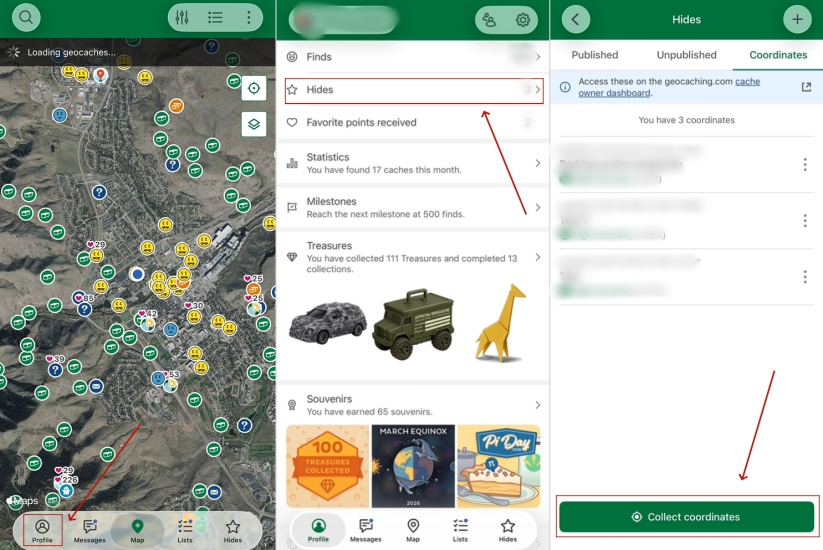
To hide a Geocache on the app, open the Geocaching application and tap Profile > Hides. From there, you can collect and copy the coordinates for your cache location.
Note:
If you're not physically at the location where the container is hidden due to secrecy or other reasons, you can try using MagFone Location Changer to spoof your phone's location to that area and obtain the coordinates on the Geocaching app without having to go there in person.
Step 7 Start a New Cache Listing
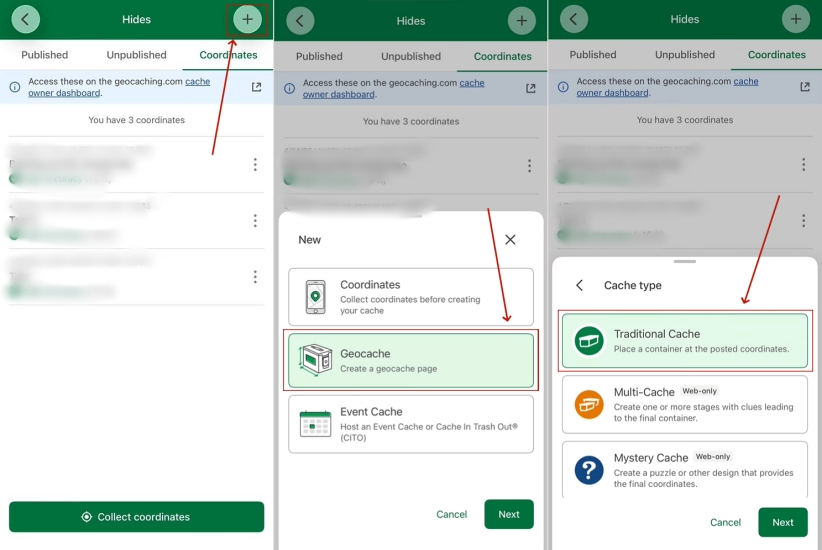
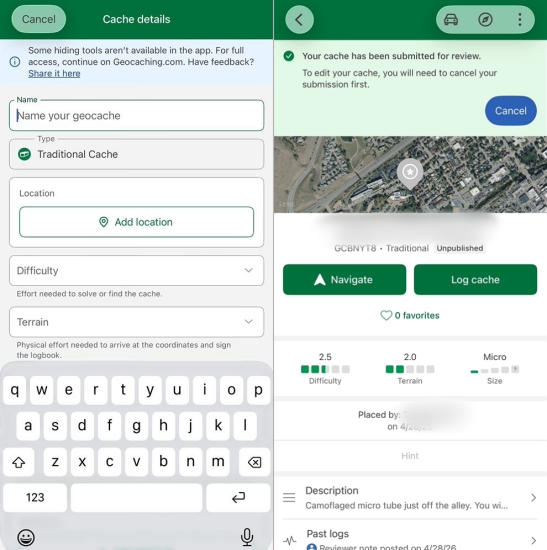
Then tap the + button and choose Geocache. Select the Traditional Cache option to begin creating your listing.
Step 8 Submit for Review
Provide essential details and submit the listing for review by a community reviewer. Reviewers may ask questions or request adjustments. Respond promptly to help the approval process move smoothly.
Step 9 Maintain Your Geocache
After publication, regularly check the cache condition, replace full logbooks, and address maintenance reports from finders.
Part 3. How to Create Clever Geocache Hides
A creative Geocache can become a favorite among players and receive positive feedback. Beyond simply hiding a container, clever cache placement adds excitement and encourages people to remember the experience. The following tips can help you design a Geocache that stands out while remaining fair and enjoyable.
Choose a Memorable Destination: Select scenic or meaningful places like viewpoints or landmarks to make the Geocaching experience unforgettable.
Use Natural Camouflage: Blend the container into the surroundings using safe materials so it stays hidden without harming the environment.
Tell a Story: Add local legends or personal notes in the description to turn a simple find into an adventure.
Use Creative Containers: Pick unique, durable containers that surprise finders while still protecting the logbook from weather and damage.
Add a Puzzle Element: Include small clues or riddles to make the search more engaging without overwhelming new Geocachers.
Hide Near Overlooked Attractions: Choose lesser-known spots locals appreciate but visitors often miss, adding discovery value.
Make Maintenance Easy: Place caches where you can regularly check and maintain them to ensure long-term success.
Learn from Highly Rated Caches: Study popular caches with many favorites to understand what makes them enjoyable and memorable.
Consider Seasonal Conditions: Avoid locations that become unsafe or inaccessible during weather changes or seasonal environmental shifts.
Plan for Stealth Placement: Hide during low-traffic times to avoid being seen and unintentionally exposing the cache.
Part 4. Conclusion
Learning how to hide a Geocache is an exciting way to contribute to the Geocaching community. By understanding what a Geo cache is, choosing a unique location, using a quality container, collecting accurate coordinates, and following official guidelines, you can create an enjoyable experience for fellow adventurers.

Olivia Wood
Editor in chief




